Start with the teeth you need to replace
First: do you need a full or partial denture?
A full denture replaces all the teeth in one arch. You might need an upper denture, a lower denture or both. A partial denture replaces some missing teeth while your natural teeth remain.
With a partial denture, it is worth asking how the design will be supported and whether any clasps may show. Our guide to how partial dentures stay in place explains this with photographs from Simon. The aim is to replace missing teeth while caring for the ones you still have.
Acrylic, chrome or flexible: what changes?
Once the overall design is clear, the next question is which material makes sense. Ask about comfort, appearance, cleaning and future repairs together. A feature that sounds attractive on its own may come with a compromise elsewhere.

A familiar option
Acrylic dentures
Acrylic is a rigid plastic used for many full dentures and some partial dentures. It allows replacement teeth and gum contours to be shaped as part of the denture.
Worth discussing: whether the design suits your present needs and whether changes may be needed later. Acrylic designs can often be repaired or altered, although the condition and type of break determine what is possible.
Keep in mind: acrylic is not unbreakable. A denture that repeatedly cracks or moves needs its fit checked, not simply another repair. See our denture repair service if you already have damage.
A metal framework
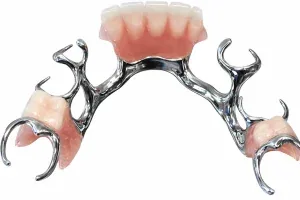
Chrome partial dentures
A cobalt-chromium framework can provide a thinner, rigid structure for a partial denture. The design depends on the remaining teeth and where support is needed.
Worth discussing: the space it will occupy, where any metal rests or clasps will sit, and how it will feel around your natural teeth.
Keep in mind: a metal framework does not make every other part of the denture metal. Replacement teeth and gum-coloured sections still need care. Future additions or repairs depend on the original design. Ask to see an example during your consultation.
An option for selected cases
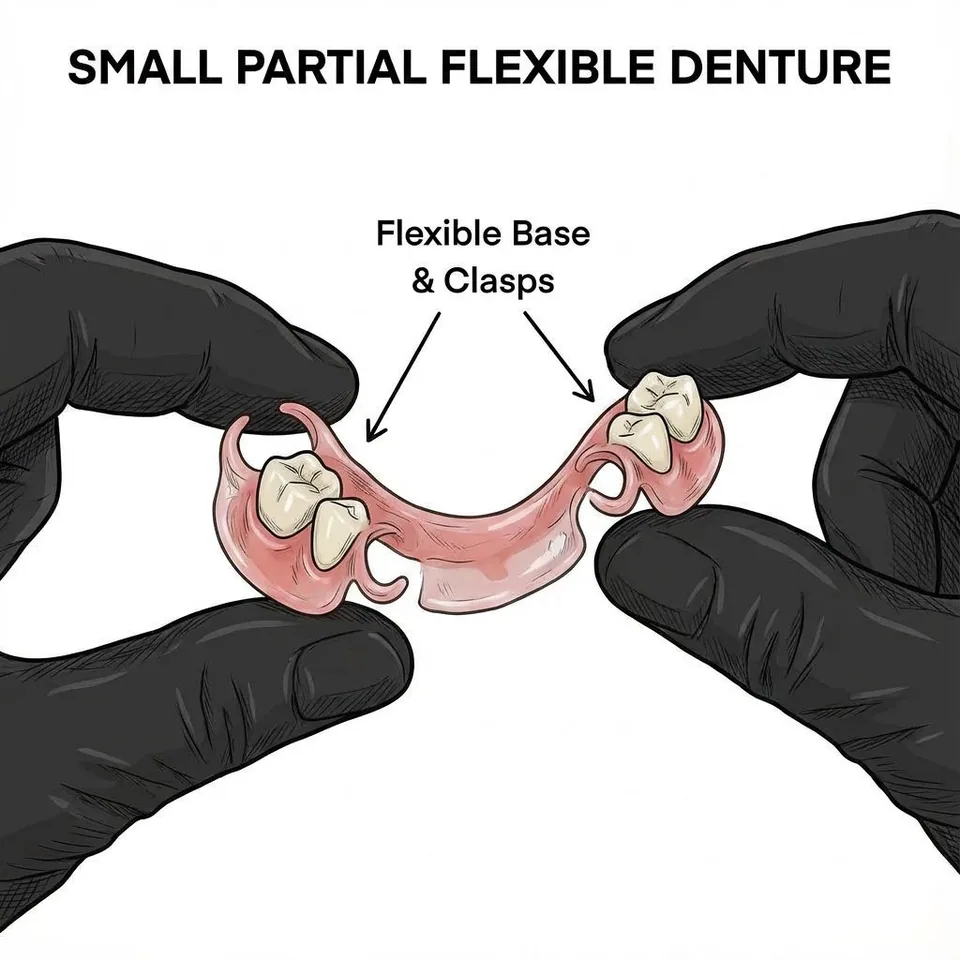
Flexible partial dentures
Flexible materials may appeal if you are concerned about visible metal clasps. Some designs use gum-coloured flexible clasps around the natural teeth.
Worth discussing: how the proposed denture will be supported, how to clean it and what can be done if your mouth changes.
Keep in mind: flexible does not automatically mean more comfortable, more stable or better for chewing. The evidence comparing flexible and conventional partial dentures is mixed. Relining, adding teeth and repairing a flexible denture may need a different approach, depending on the material. Ask about those practicalities before choosing.
Are implant-retained dentures the best option?
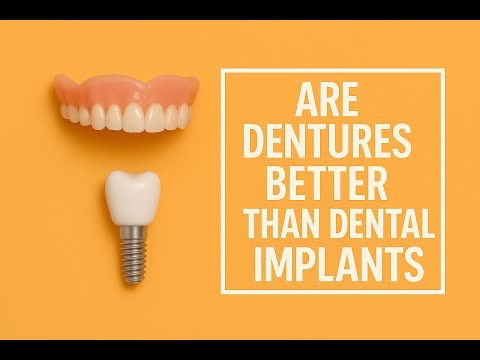
They can be worth exploring when extra retention is important, especially if a conventional denture is difficult to keep steady. A removable implant-retained denture attaches to implants and comes out for cleaning. A fixed implant bridge is a different restoration, removed by a dental professional.
Implants need an individual assessment. An implant dentist considers the available bone, oral health, general health and risk factors. Surgery, healing, cleaning requirements and the overall cost belong in that discussion. Implants and their attachments also need ongoing maintenance.
Simon discusses the distinction in the video below. It is useful background, but it cannot tell you whether implants are suitable for you.
What if you have just had teeth removed?
An immediate denture may be made in advance and fitted when teeth are removed. “Immediate” describes the timing, not a superior grade of denture.
Gums and the supporting tissues change during healing, so adjustments, a reline or a replacement may be needed. Ask what is included in your treatment plan and how the fit will be reviewed. Our guide to denture relining explains what a reline changes.
Does the way a denture is made matter?
Yes, but a manufacturing label is only part of the picture. Your impressions, bite records and tooth arrangement need careful attention too. At the try-in, you can discuss the appearance before the denture is finished.
Our materials and manufacturing overview includes injection moulding and digital manufacturing. To understand how appointments and laboratory work fit together, see dentures made and fitted by a Clinical Dental Technician.
A handy guide for mealtimes
What can you eat with dentures?
Choosing your dentures is one part of the story. Feeling comfortable at breakfast, lunch and dinner matters too.
Our guide to eating with dentures brings together softer meal ideas, practical tips for getting used to a new set and three helpful videos from Simon.
You’ll find advice on building up to familiar foods and knowing when slipping or soreness needs a review. It is an easy next read if you are considering new dentures in Cirencester or the Cotswolds, or adjusting to the ones you already wear.
Read our food and dentures guide →Still finding meals difficult? Talk to our Poulton clinic about getting the fit checked.

Personal denture care in the Cotswolds
Who will help you choose?
At Cotswold Denture Clinic in Poulton, near Cirencester, you see Simon Miles directly. You can explain what is not working with your current dentures, what you would like to change and what matters most to you.
Simon began training as a dental technician in 1989, established his own laboratory in 2000 and qualified as a Clinical Dental Technician in 2010. His clinical training took him to George Brown College in Toronto, Canada, before gaining his UK qualification.
That experience gives you someone to discuss both the design and the fit with, supported by our in-house laboratory. The aim is a clear recommendation you understand, with time to ask questions about the alternatives.
More about Simon and our Poulton clinic →Read his story in Meet Simon Miles, or see how care with a CDT works.
Five questions to take to your consultation
- Why does this option suit my mouth? Ask for the reason behind the recommendation.
- What are the alternatives? Understand the main benefit and compromise of each suitable choice.
- What happens at the try-in? Find out when you can comment on appearance and bite.
- What if the fit changes? Ask about reviews, adjustments and possible future alterations.
- What does the quotation include? Compare the full treatment plan, rather than the headline price.
You can explore our denture pricing page before your visit. A personalised quotation follows assessment, because the right design and any other treatment needed vary from person to person.
Simon on Talking Dentures
A little more help choosing
Prefer to hear the explanation? These two videos cover implants and the stages involved in getting dentures. Each opens the original video on YouTube.
 ▶ Watch on YouTube
Dentures vs implants: which is better for you?
Simon explains removable implant-retained dentures and fixed alternatives, and why choosing between them needs a personal assessment.
Watch Simon’s explanation → ▶ Watch on YouTube
What is the process of getting dentures?
A walk through consultation, impressions, the try-in and fitting, so you know which stages to ask about.
Watch Simon’s explanation →Explore more patient questions on Simon’s Talking Dentures channel or browse our Denture Q&A guides.
Dentures near Cirencester
A clear next step, close to home.
If you are comparing dentures in Cirencester or looking for private denture care in the Cotswolds, our clinic is in nearby Poulton. You do not need to arrive knowing which material to choose.
Bring your current dentures and tell us about eating, speaking, comfort and appearance. We will talk through the suitable choices and explain the proposed treatment and cost. If your main concern is a break, visit our denture repairs near Cirencester page instead.
Free on-site parking makes visiting straightforward. Find the address, map and ways to get in touch on our contact page.

Your next step
You do not need to choose on your own.
At Cotswold Denture Clinic in Poulton, near Cirencester, you can discuss your needs directly with Simon Miles, our Clinical Dental Technician. Bring your questions and any current dentures. We can explain the suitable choices in plain language.
Book a free consultation →A small refundable booking fee is required to secure your consultation. Prefer to talk first? Call 01285 706687.
Sources and further reading
General information, checked 5 November 2026. Treatment suitability requires an individual assessment.
- NHS: dentures, partial dentures and immediate dentures
- Leeds Teaching Hospitals: complete dentures
- Leeds Teaching Hospitals: removable partial dentures
- Leeds Teaching Hospitals: dental implants and overdentures
- Canada’s Drug Agency: evidence review of flexible dentures
Images are existing clinic website assets. Labelled diagrams are illustrations; product photographs show denture and laboratory examples.