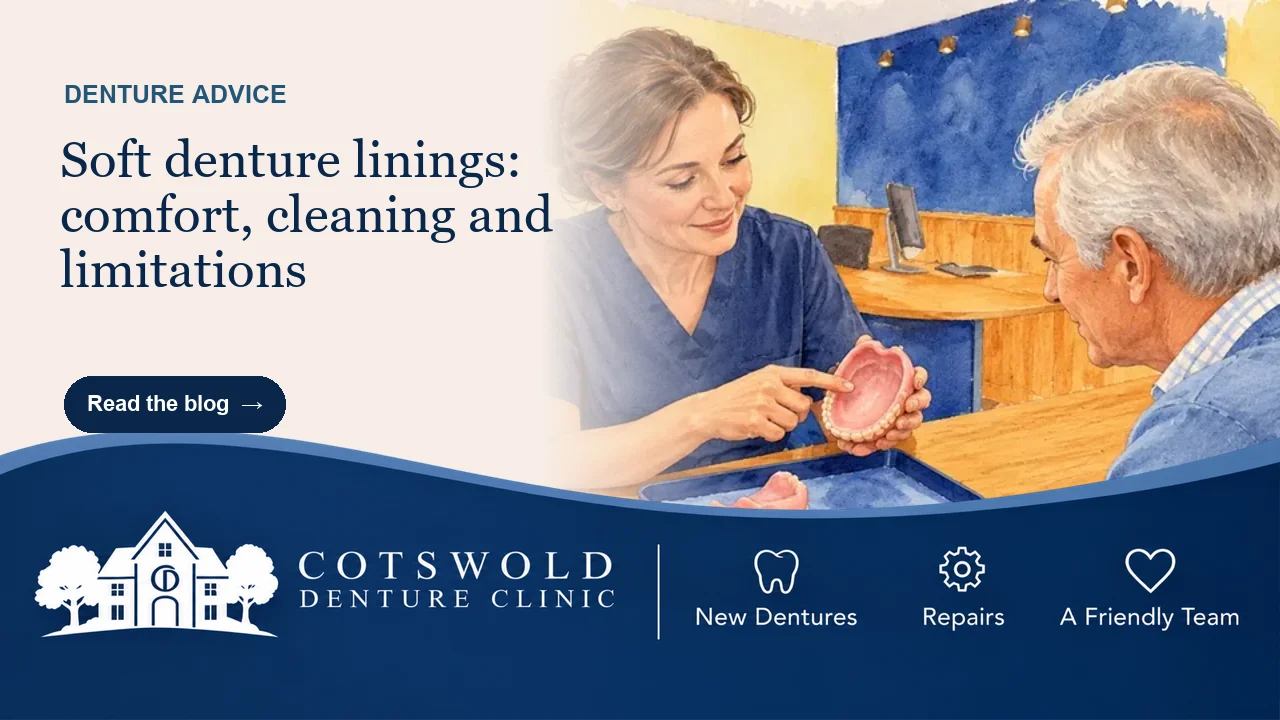
A soft lining can be considered for selected denture problems, but it is not simply a cushion that makes any denture comfortable. The reason for soreness, the condition of the mouth and the design of the appliance still need assessment.
Ask what type of lining is proposed
Some materials are used temporarily while tissues recover; others are intended for a longer period. They have different maintenance and replacement needs. Ask how long the lining is expected to remain useful and what signs mean it should be reviewed.
Follow its own cleaning instructions
A soft lining may not tolerate the products or brushing method used on an ordinary acrylic base. Ask for written guidance about brushes, soaking products, contact times and storage. Do not scrape, peel or trim an edge that starts lifting.
Understand the limits
A lining cannot reliably compensate for every unstable bite, worn tooth arrangement or damaged denture. If discomfort continues, the underlying cause needs reassessment. Repeatedly adding cushioning at home can change the fit and delay useful treatment.
Watch for material changes
Report peeling, roughness, persistent odour or a change in feel. Keep review appointments even if the lining initially makes the denture easier to wear. Ask what the next step will be once a temporary lining has done its job. Comfort should be judged alongside tissue health, stability and a cleaning routine you can manage, rather than by softness alone.
Sources and further reading
These sources support the clinical background. The practical planning suggestions are general guidance, not an individual diagnosis or treatment plan.
Information checked: 22 October 2026.
Related guides
This guide provides general information. Simon and your dental team can advise on your own circumstances.