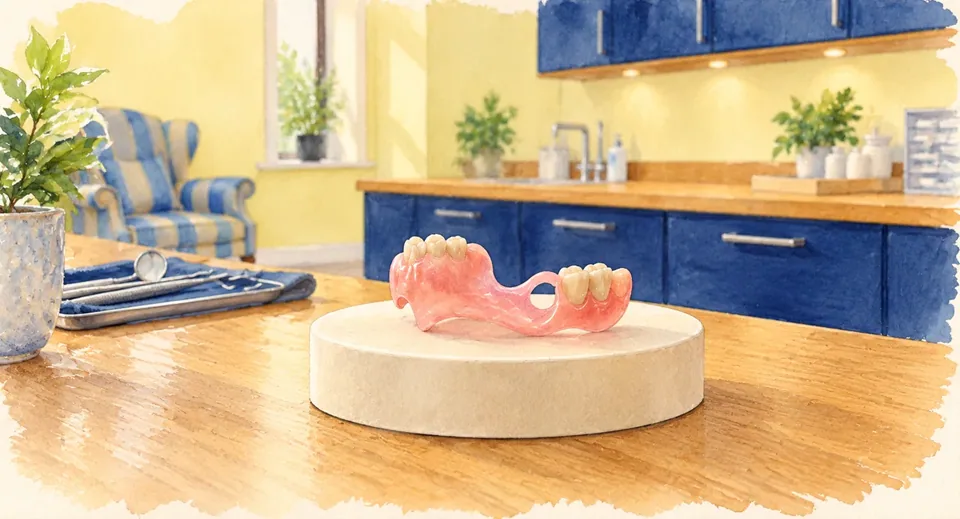
Acrylic partial dentures use a plastic base to carry replacement teeth and, where needed, replace the appearance of missing gum tissue. They can be useful in a range of situations, including some changing mouths. Choosing acrylic is not automatically a compromise in the quality of your care.
Why it may be recommended
An acrylic design can sometimes be easier to modify if further treatment or tooth loss is expected. It may also be considered when a metal framework is not suitable. Your clinician should explain whether the proposed denture is intended as an interim appliance or a longer-term option.
Ask about size and support
The denture needs enough material and an appropriate shape to work safely. That can mean some bulk. Simply asking for the smallest possible plate may overlook how it will be retained or how forces are shared. Ask where support comes from and what changes you should expect when eating and speaking.
Plan for maintenance
Acrylic can be repaired or added to in some circumstances, but this is not guaranteed for every appliance. The position of a new gap, the condition of the existing denture and your bite all matter. If someone says teeth can be added later, ask what the practical limits are.
Keep your natural teeth in the plan
Your dentist should assess remaining teeth and gums before the denture is designed. Once fitted, clean the denture separately from your teeth and attend the reviews recommended for you. A straightforward material still needs a considered design, a usable cleaning routine and a clear aftercare plan.
Sources and further reading
These sources support the clinical background. The practical planning suggestions are general guidance, not an individual diagnosis or treatment plan.
Information checked: 22 October 2026.
Related guides
This guide provides general information. Simon and your dental team can advise on your own circumstances.