Hard deposits on a denture can be frustrating because ordinary brushing may not shift them. That does not mean the answer is a harder brush, a sharp scraper or a stronger home mixture. First establish what the deposit is and which cleaning methods are safe for the appliance.
Avoid damaging the surface
Scraping with metal tools or abrasive powders can scratch a denture or damage its components. Hot water and improvised chemical soaks can create other problems. Do not use a method intended for a kettle, bathroom fitting or natural tooth simply because the deposit looks similar.
Check the routine you already use
Tell your clinician how often you clean the denture, whether you soak it and which products you use. Bring the packaging if possible. Different materials need different instructions, especially if the denture contains metal, a flexible base or a soft lining.
Ask about professional cleaning
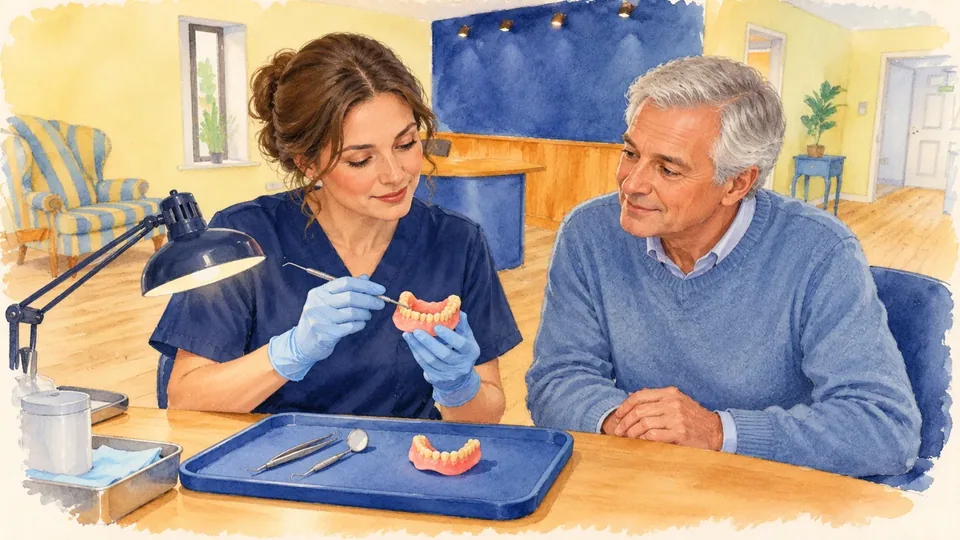
A dental professional can assess whether a deposit can be removed safely and check the surface underneath. Repeated build-up may be a reason to refine the daily routine or review how easily you can reach certain areas. It does not automatically mean the denture needs replacement.
Look beyond the stain
If there is also a persistent smell, soreness, bleeding or a change in fit, mention that rather than asking only for polishing. Cleaning cannot resolve every cause of discomfort. Once the deposit has been assessed, ask for a routine you can actually manage at home, including what to do if it starts returning.
Sources and further reading
These sources support the clinical background. The practical planning suggestions are general guidance, not an individual diagnosis or treatment plan.
Information checked: 22 October 2026.
Related guides
This guide provides general information. Simon and your dental team can advise on your own circumstances.