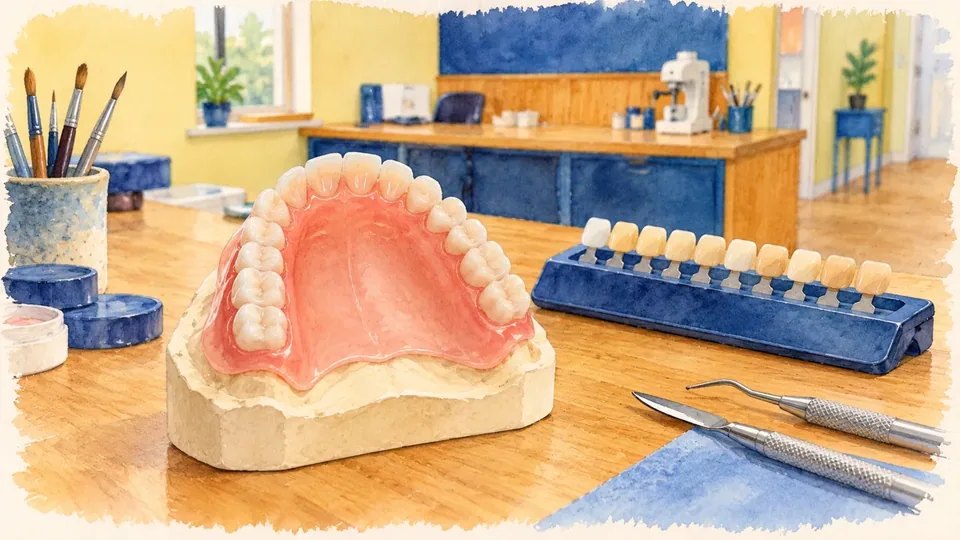
The plate across the roof of an upper denture has a job: it is part of the appliance's support, strength and retention. If it feels bulky, discuss that with your clinician. Making it thinner is not always the safest or most useful solution.
Describe the difficulty precisely
Is the problem gagging, speech, tongue space, temperature sensation or simply unfamiliarity? Explain where the plate feels intrusive and whether it has always felt that way. These are different problems and may need different responses.
Ask what can safely change
The material, design and condition of the denture affect how much alteration is possible. Removing material can weaken the base or affect how it functions. A different design may sometimes be considered, but an upper denture cannot simply be cut into a horseshoe because a picture online looks smaller.
Discuss alternatives in context
Some partial dentures and some implant-supported arrangements use different designs. Their suitability depends on remaining teeth, implants, tissues and the wider treatment plan. Do not assume that a palate-free option is available or appropriate without assessment. Confirm which services a clinic actually provides.
Avoid home thinning
Sanding or filing the plate can create roughness, cracks or an appliance that no longer works properly. Bring it for review with both arches if you wear two dentures. Ask the clinician to explain the compromise between comfort, strength and support, and what follow-up is needed after any change. A lighter feeling should not come at the cost of a damaged or unsafe denture.
Sources and further reading
These sources support the clinical background. The practical planning suggestions are general guidance, not an individual diagnosis or treatment plan.
Information checked: 22 October 2026.
Related guides
This guide provides general information. Simon and your dental team can advise on your own circumstances.