
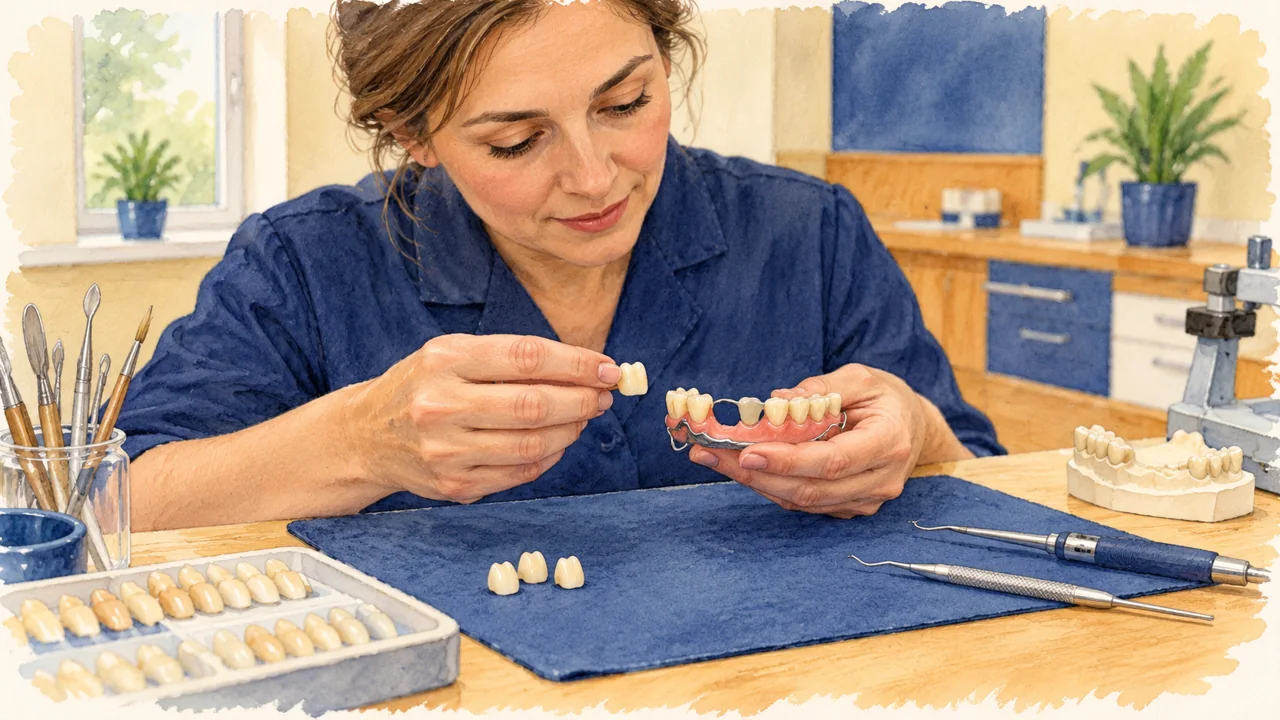
Sometimes a replacement tooth can be added to an existing partial denture after further tooth loss. Sometimes the appliance needs more substantial redesign or replacement. The answer depends on the gap, the material, the condition of the denture and what support remains.
Arrange the discussion before extraction where possible
If a dentist has recommended removing a tooth, ask how that affects the denture. Planning in advance may allow the dental and laboratory stages to be coordinated. Do not assume that taking the appliance in after extraction will always produce an immediate solution.
Bring the whole appliance
The clinician needs to assess the base, framework, teeth and fit together. A photograph of the new gap cannot establish whether adding a tooth will leave the denture adequately supported. If a supporting tooth has been lost, the problem may be more than filling an empty space.
Understand changes during healing
After extraction, the gum and bone change as they heal. An addition made around that stage may need further review, relining or replacement. Ask what is intended to be temporary and what costs or appointments could follow. Avoid treating a successful addition as the end of all maintenance.
Confirm what is possible
Some materials are more straightforward to modify than others, and a damaged or poorly fitting appliance may not be a sensible foundation. Your dentist must address the health of remaining teeth, with the appropriate referral or prescription arrangements for CDT treatment. Ask for the reason behind the recommendation and the likely time without your usual denture.
Sources and further reading
These sources support the clinical background. The practical planning suggestions are general guidance, not an individual diagnosis or treatment plan.
Information checked: 22 October 2026.
Related guides
This guide provides general information. Simon and your dental team can advise on your own circumstances.
