
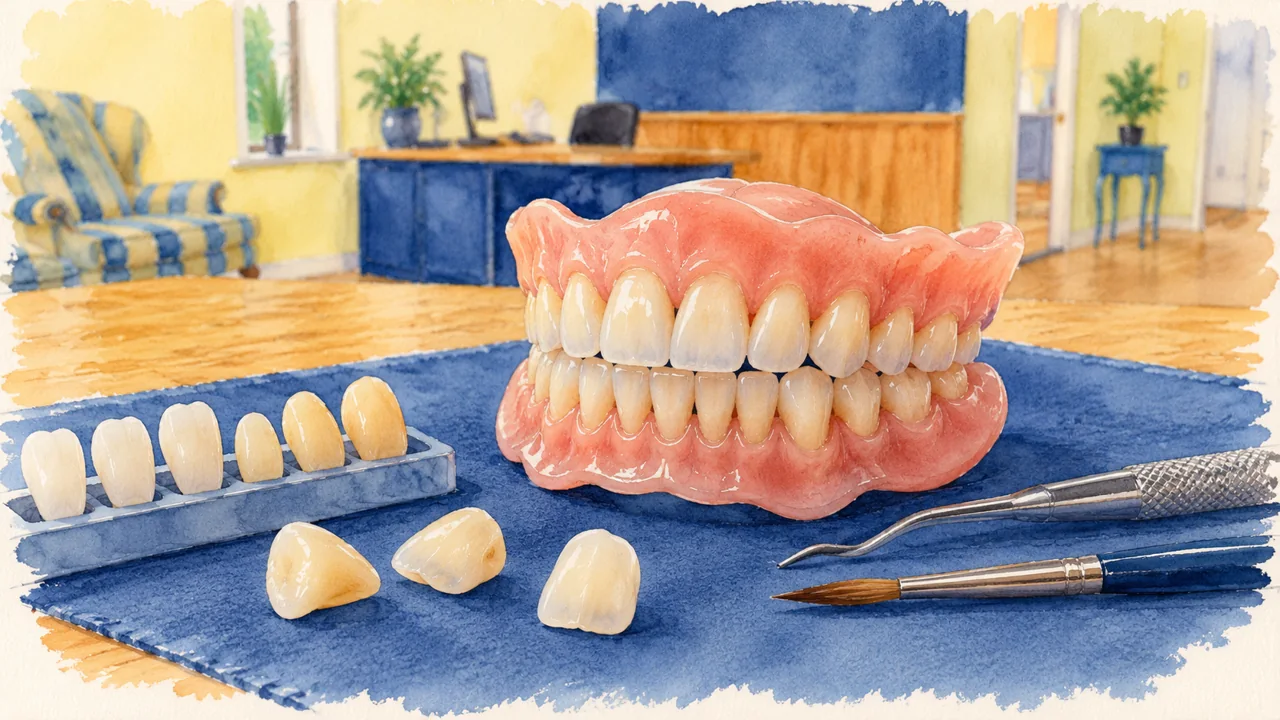
A natural-looking denture does not have to be perfectly uniform. Small choices in tooth arrangement, shade and surface detail can help the result feel individual. The aim is an appearance you are comfortable with, rather than adding character simply for its own sake.
Start with what feels familiar
Tell your clinician whether you liked your former smile or would prefer a change. Photographs can help explain a detail such as a small irregularity or how much tooth you show. If you have no useful photographs, describe the impression you want in everyday language.
Understand what can be personalised
The available tooth ranges and the design of the denture affect the options. Ask what can be changed in arrangement and appearance, and which choices would carry additional work or cost. Avoid assuming that a standard product name means every denture made from it will look the same.
Keep function in the discussion
The teeth must also work with your bite, lips and speech. A cosmetic preference may need modification to achieve a practical arrangement. Your clinician should explain that balance rather than promising to recreate an image exactly.
Use the review stage honestly
Where a try-in is available, look at your face at rest and when smiling. Say if the result feels too regular, too prominent or unlike you. Ask what remains adjustable before the denture is finished. Individuality is most useful when it is agreed with you and checked in your own face, not added as an assumption about your age or personality.
Sources and further reading
These sources support the clinical background. The practical planning suggestions are general guidance, not an individual diagnosis or treatment plan.
Information checked: 22 October 2026.
Related guides
This guide provides general information. Simon and your dental team can advise on your own circumstances.
